Generate names, emails, addresses, dates, prices and the references between them for MongoDB collections or SQL tables. Start from your real schema or a ready-made dataset, check a live sample, then write it in one click.
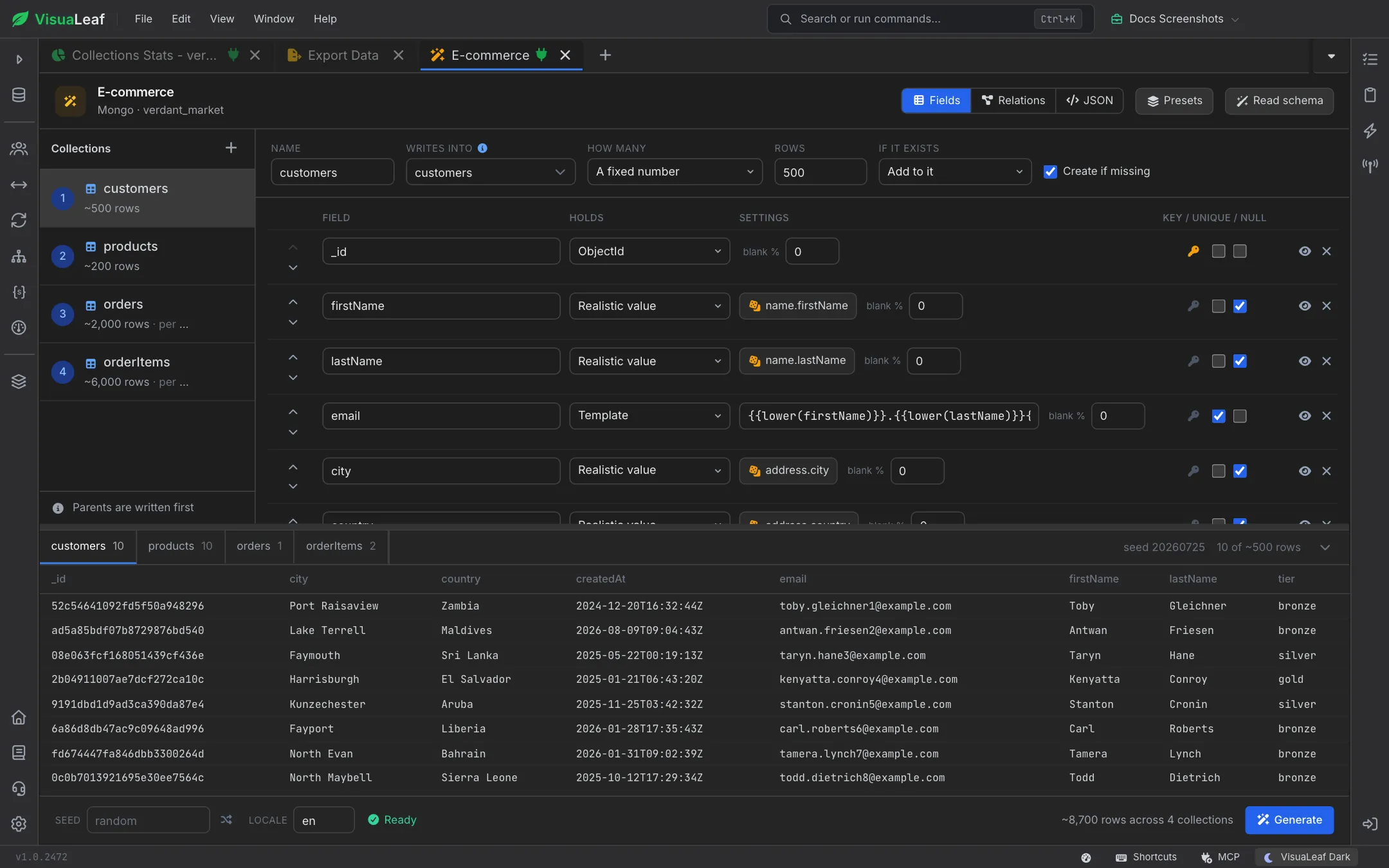
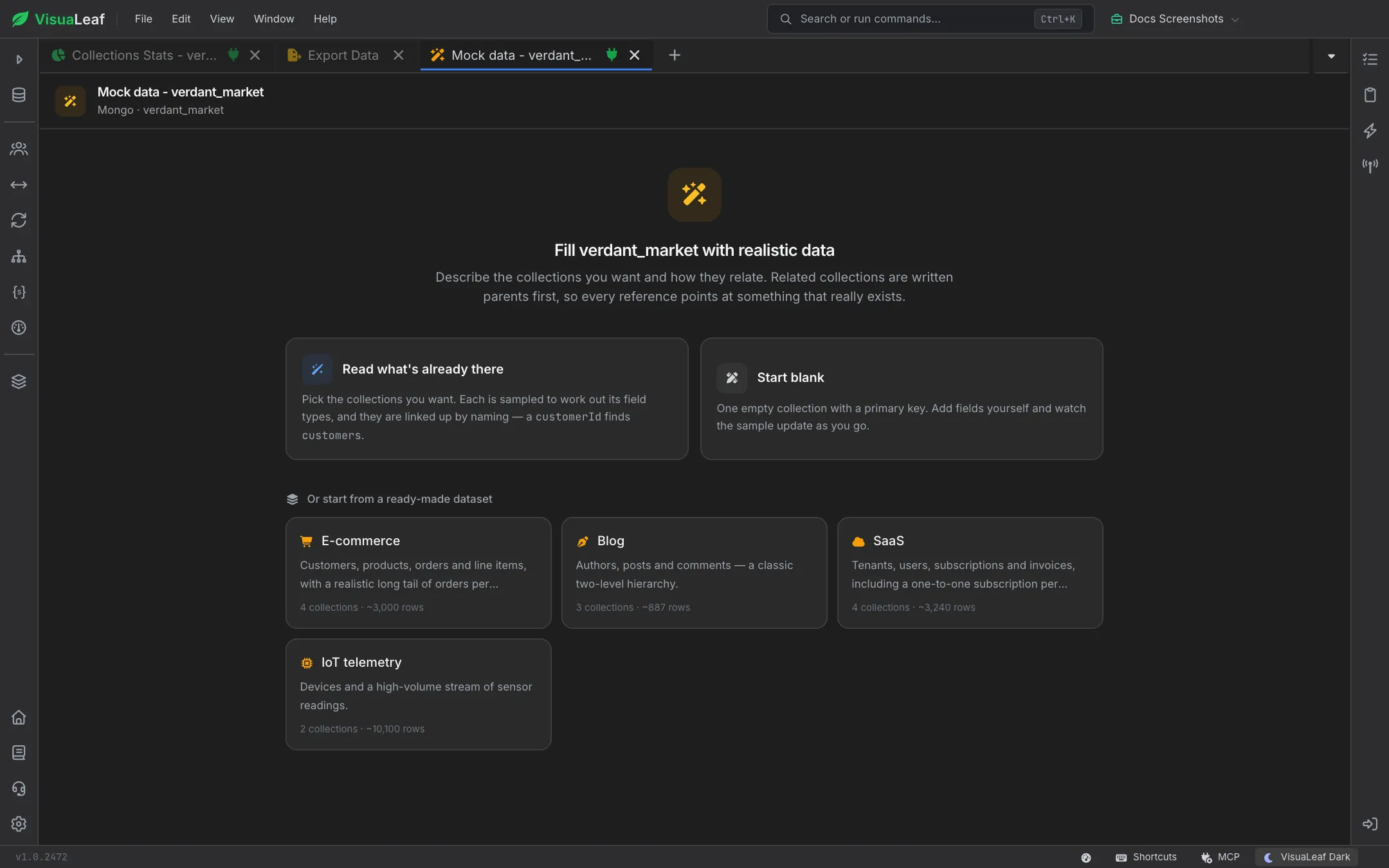
Right-click a database, a SQL schema or a table and choose Generate Mock Data. Read what's already there samples your existing collections or tables to work out field types and links them by naming, so a customerId field finds customers. Or start blank, or pick a ready-made dataset: E-commerce, Blog, SaaS or IoT telemetry, each showing how many collections and roughly how many rows it creates.
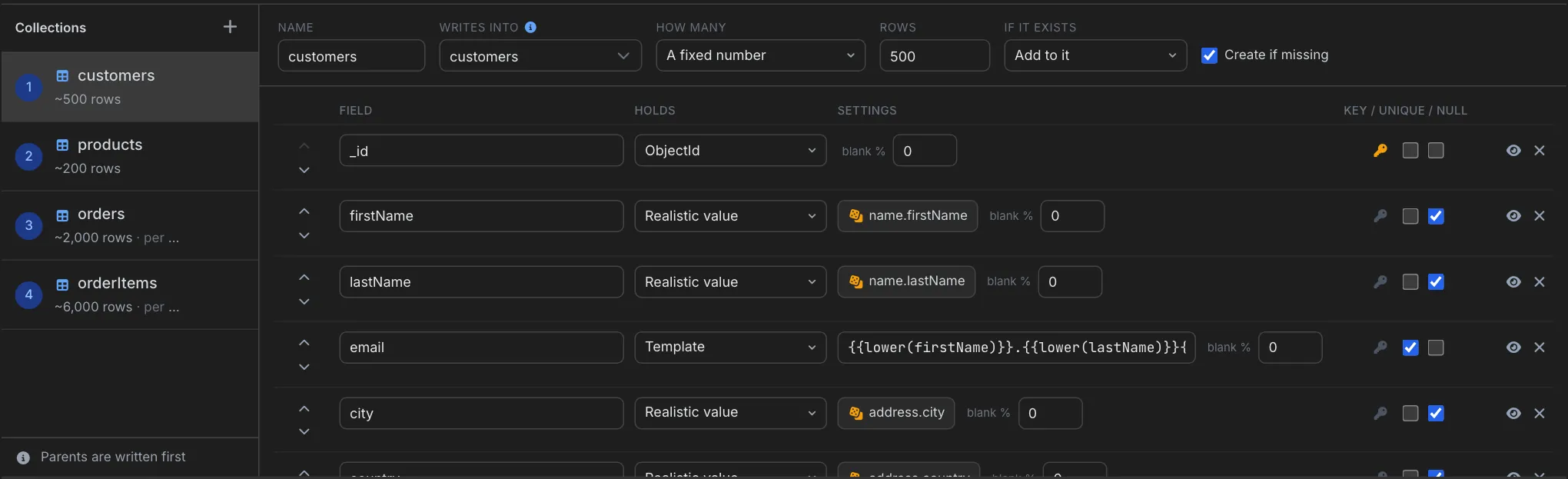
Pick what each field holds: realistic names, emails, addresses, companies and prices, text templates built from other fields, weighted lists of values like order statuses, or plain numbers, dates and IDs with your own ranges. Set how often a field is left blank, mark keys and unique fields, and choose a locale so names, addresses and phone numbers fit the region.
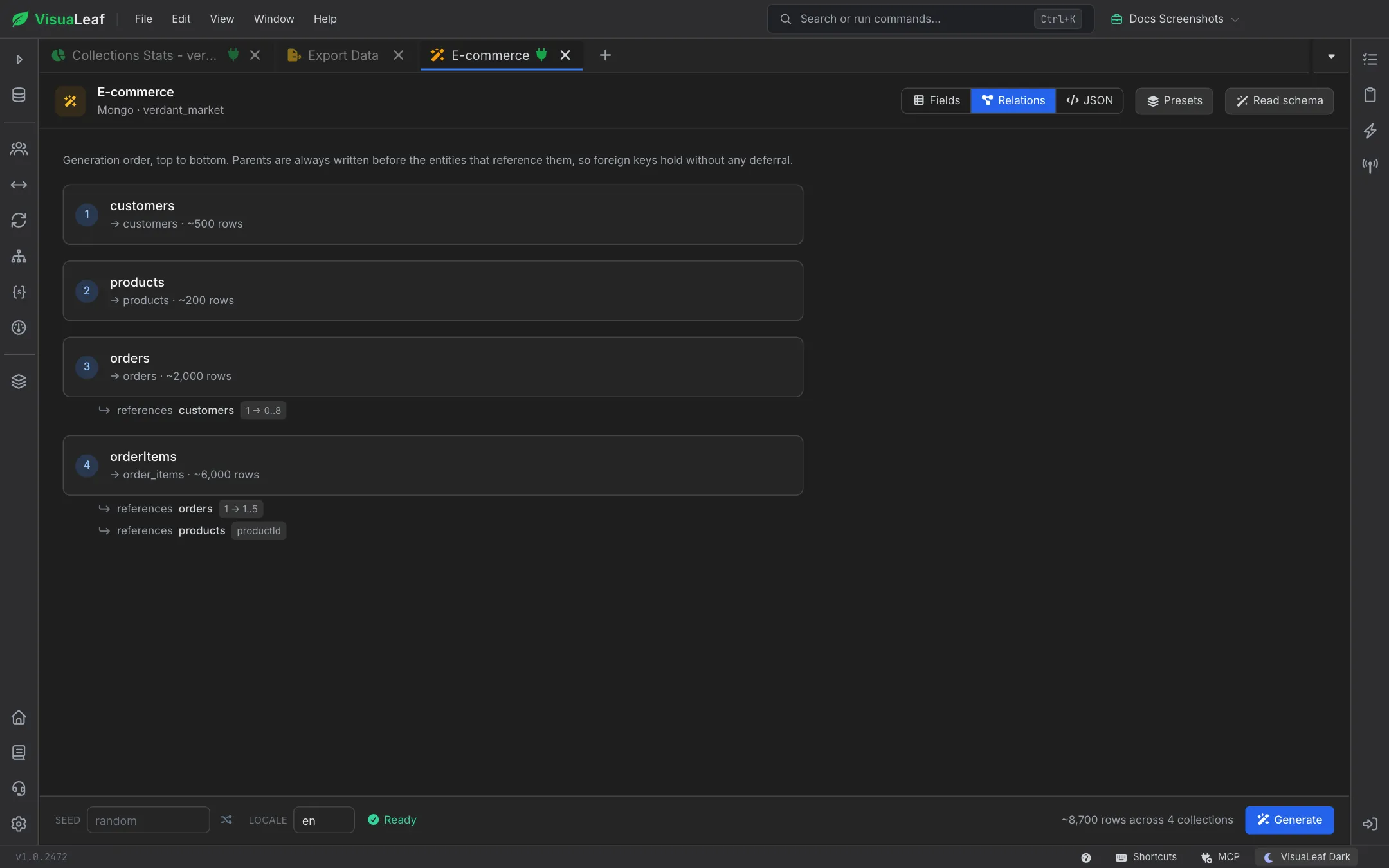
Parents are always written first, so every reference points at a row that really exists. The Relations view shows the generation order and how many children each parent gets, such as 1 to 5 order lines per order. Spread child counts evenly, around the middle, or with a long tail where a few parents get most of them, just like production data.
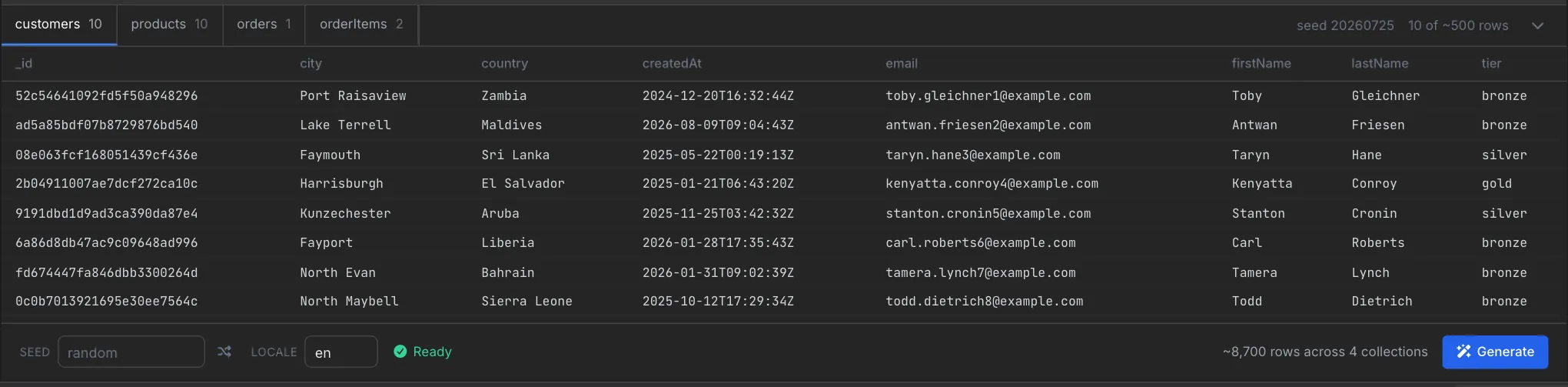
A sample of every collection updates as you type, with borrowed keys highlighted, so you see the data before anything is written. Enter a seed to get exactly the same dataset every time, and keep the whole plan as a JSON blueprint you can copy between environments. When a run finishes, reuse its seed to reproduce the same data later.
Design your collections and tables in a diagram, then fill them with mock data to see the model with real-looking rows. After generating, open the diagram to check how the related data fits together.
Check generated documents against your MongoDB validation rules. Generate a test dataset, then confirm your schema accepts the data your app will really write before it reaches production.
Check out the documentation for every field type, collection setting and tip for building test data with the Mock Data Generator.
Read the DocumentationGet started free with our Community Edition. Includes a 14-day trial of Pro features.